

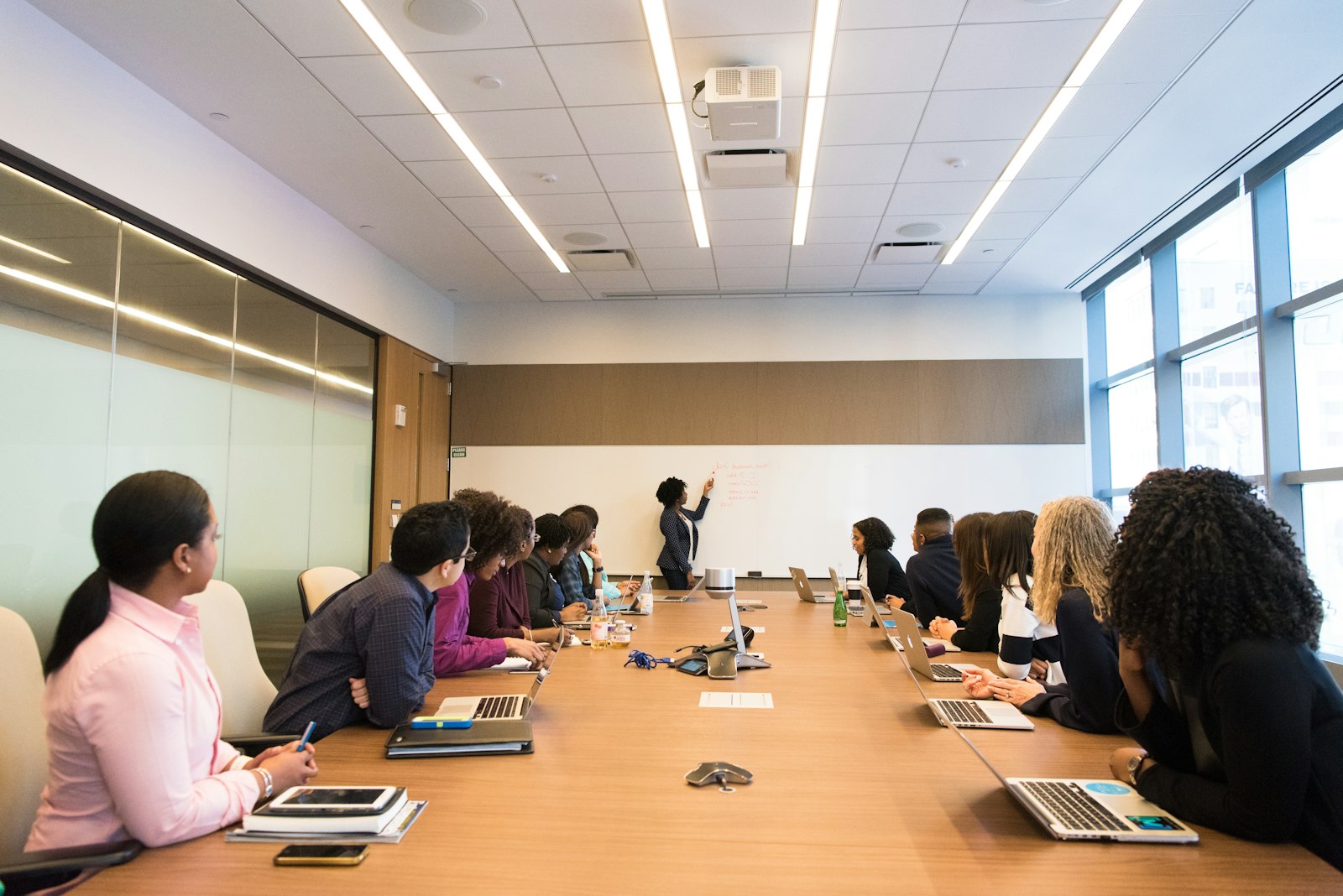
We almost always look in the wrong place. When a transformation slows down, we look at the teams, the tools, the method. We commission an audit, redraw the plan, add a project manager. And all the while, what is blocking carries on blocking, three floors higher up.
The front line is almost never the problem
I have led transformations across perimeters of three hundred to more than four hundred people, in automotive, banking, media and software. I cannot recall one where the teams had not understood what was being asked of them.
What was missing was elsewhere: a trade-off no one was making, two responsibilities that overlapped without anyone wanting to say so, a hard point everyone politely worked around. None of those is fixed by a plan. They are fixed by a decision - and a decision is made at the top.
Eighteen leaders, eighteen ways of holding a frame
A luxury division launches a transformation built on four requirements: a culture of direct feedback, an explicit strategic frame, real conditions for cooperation, new formats for meetings. It is carried by eighteen leaders - one member of the executive committee for each of the group’s brands.
The frame was clear. It had been discussed, written down, signed off. The difficulty was not understanding it: it was holding it alone, at home, once the collective meeting was over and the other seventeen had gone.
This is the most ordinary and most expensive mechanism in transformation. We believe a collective agreement is settled because it was spoken together. It never is. It is replayed, silently, in every perimeter, every week, at every costly trade-off.
When everything rests on two people
Another organisation, another scale. An information systems division transforms its operating model and its management in depth. Two members of the executive committee carry it: the head of human resources and the chief technology officer.
Everything else - middle management, the operational line, the talent being prepared to take over - depends on those two people’s ability to embody what they are asking for. If they do not, no one will do it for them. And no one will tell them.
That is where an outside perspective becomes useful. Not to add a method. To be the only voice in the room with nothing to lose by naming the gap.
Change the meetings and you change where decisions happen
A procurement division launches, with its network, a transformation that is about neither tools nor processes. Four points only: how people say things to each other, the strategic frame, the conditions for cooperation, and the shape of meetings themselves.
That last point sounds incidental. It is not. An organisation’s meetings are where its decisions get made - or fail to. Change their format, their length, their attendance, what goes on the agenda and what is refused a place on it, and you physically move where the decision happens.
It is also why that transformation was carried by eighteen internal ambassadors rather than by a consultancy. A meeting does not change because a consultant recommended it. It changes because someone in the room refuses to run it the way it was run before.
What this means for you
If your transformation is stalling, the question is probably not “what more should we do?”. It is rather: which decision, known to everyone, still has not been made?
You have one in mind. It is probably uncomfortable. It commits someone, or it commits you. That is exactly why it is waiting.
The rest - the plans, the indicators, the governance - will follow far faster than you think.
The situations described here are real and anonymised. They describe contexts and interventions, not results.
Read also - What your non-decisions cost you · Four questions a leader should be able to answer
Or see the three ways of working together.
Thirty minutes, confidential and without commitment. You set out the situation; I tell you honestly whether I am the right person. Book a 30-minute introductory call →